Vol. 24 No. 45 (2026): Revista Latinoamericana de Desarrollo Económico No. 45
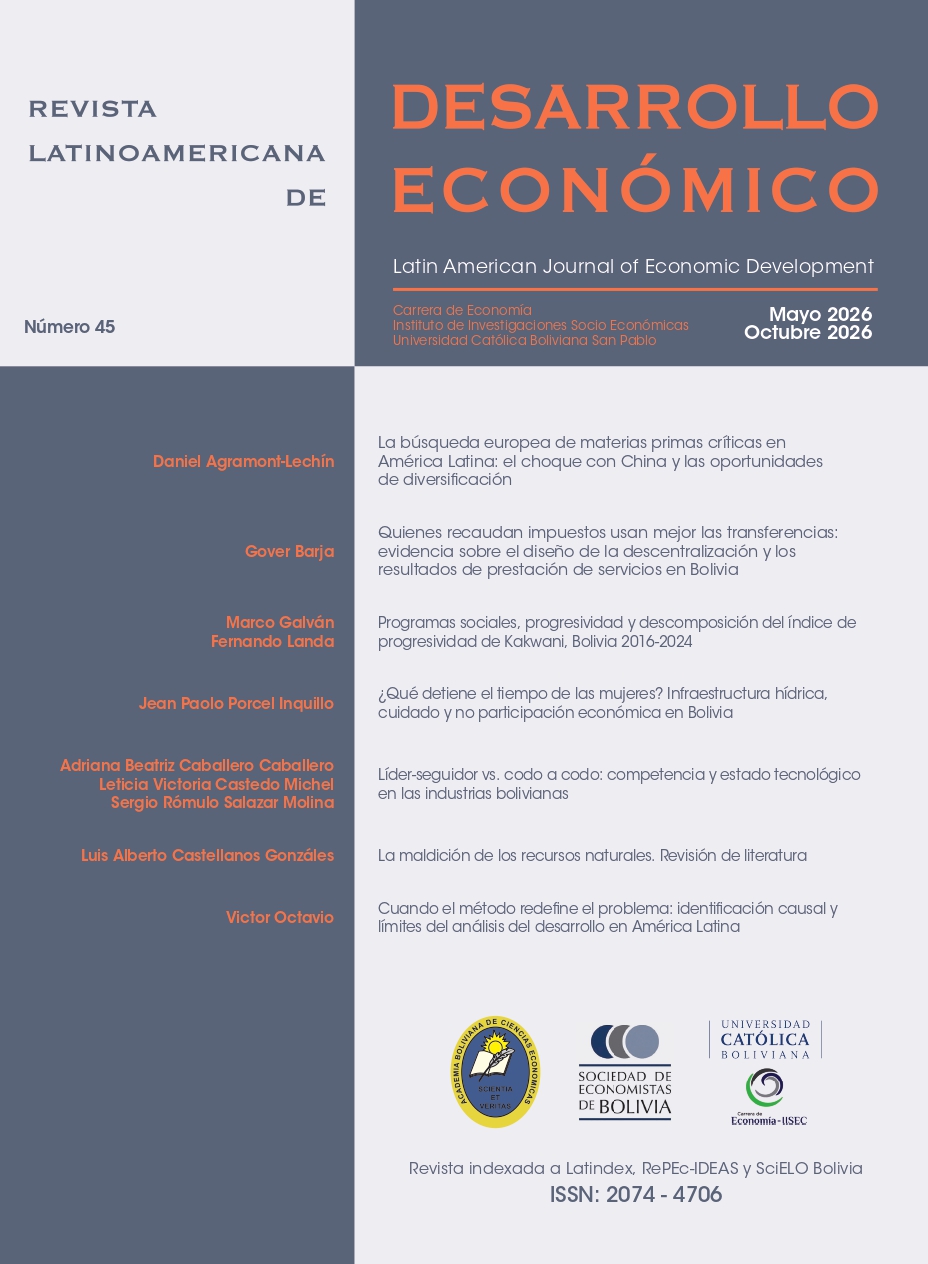
With nearly 23 years of uninterrupted publication, the Latin American Journal of Economic Development (LAJED) has established itself as an essential reference for the dissemination of national and international research. Owing to its high quality standards, the journal is now a key tool for academics, policymakers, and civil society leaders alike. This achievement is the result of the joint efforts of the Department of Economics and the Instituto de Investigaciones Socio-Económicas (IISEC) of the Universidad Católica Boliviana “San Pablo”, the Sociedad de Economistas de Bolivia (SEBOL), and the Academia Boliviana de Ciencias Económicas (ABCE), institutions united by the purpose of promoting research and generating influence in public debate.
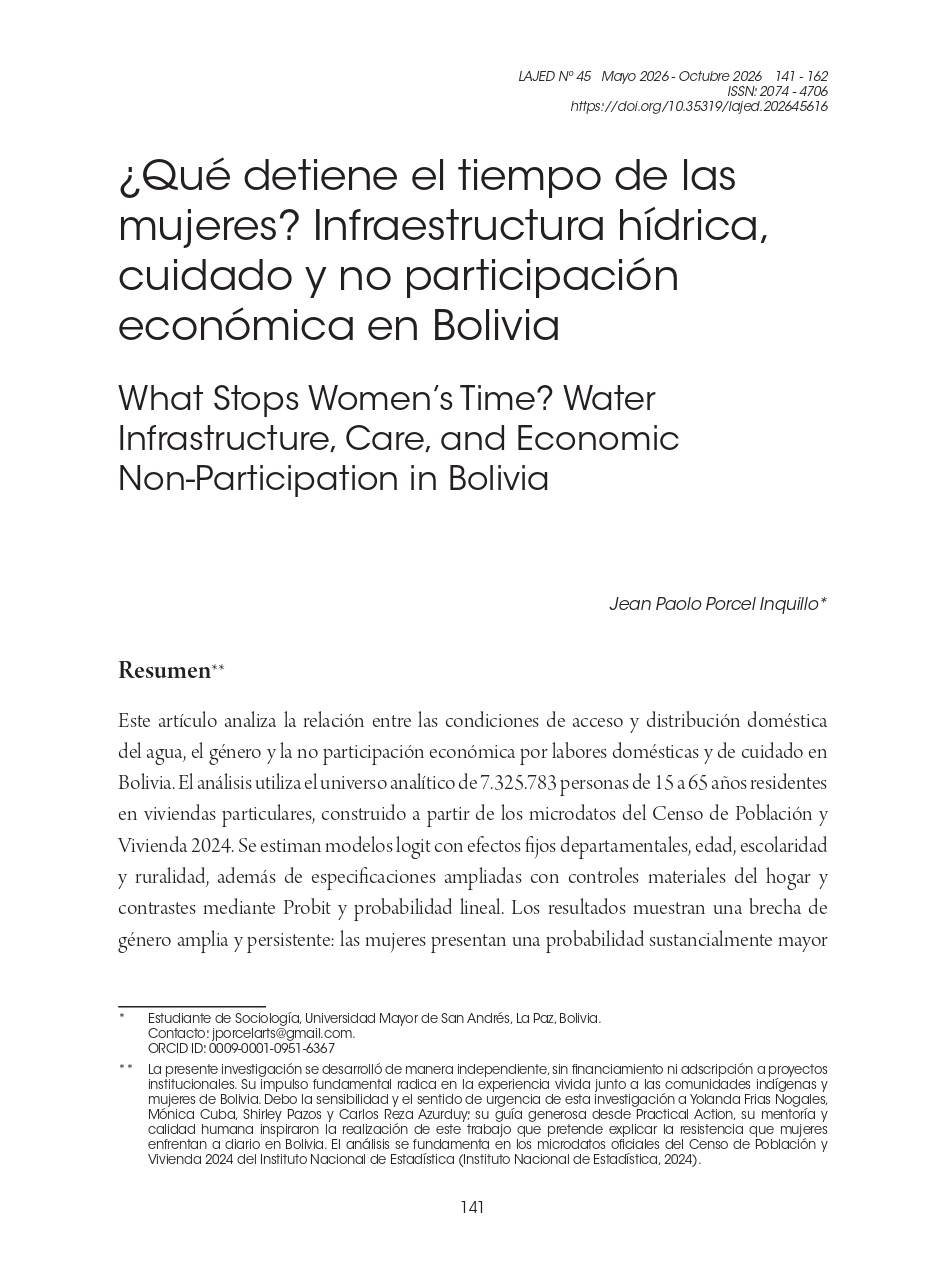
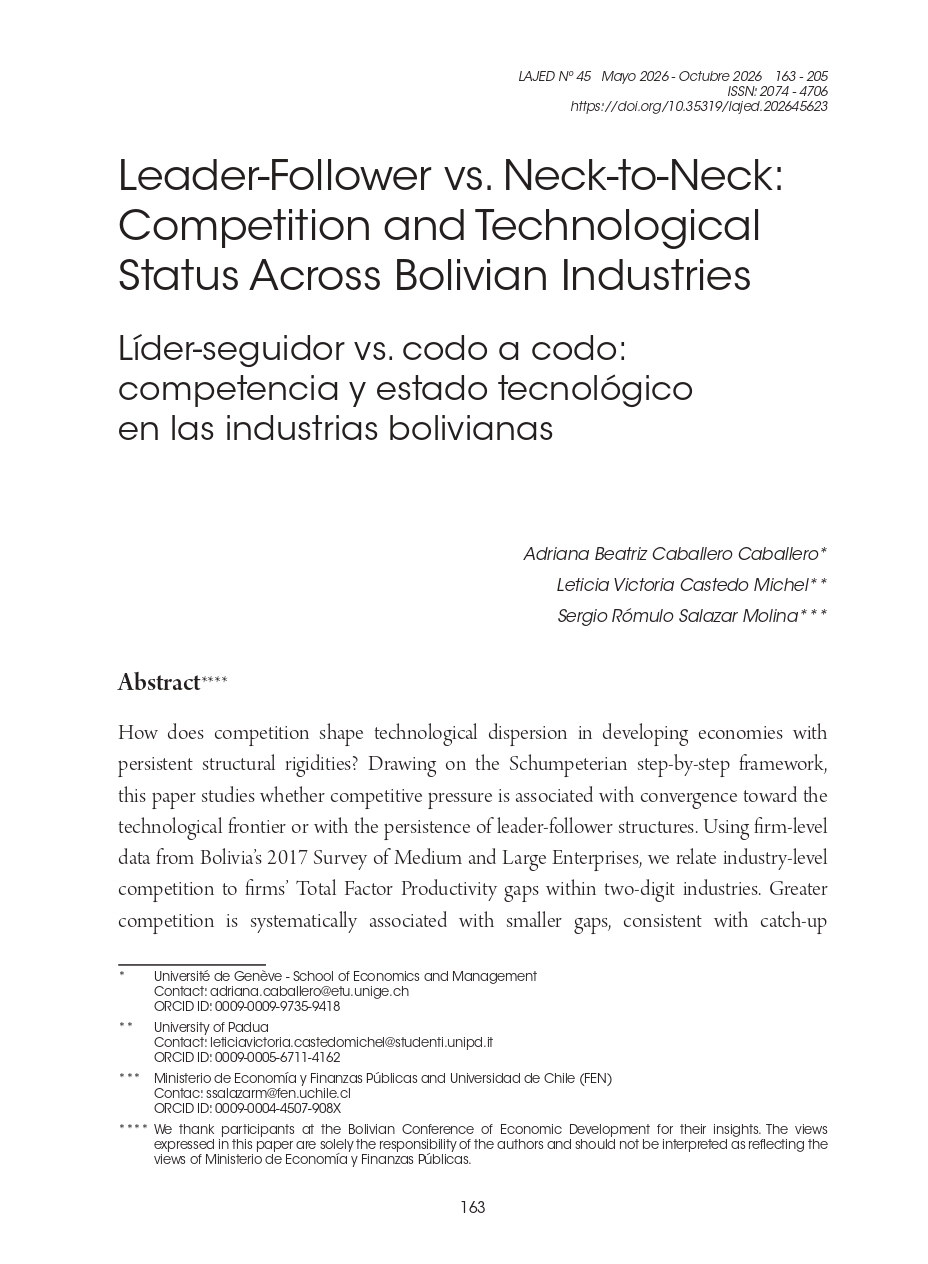
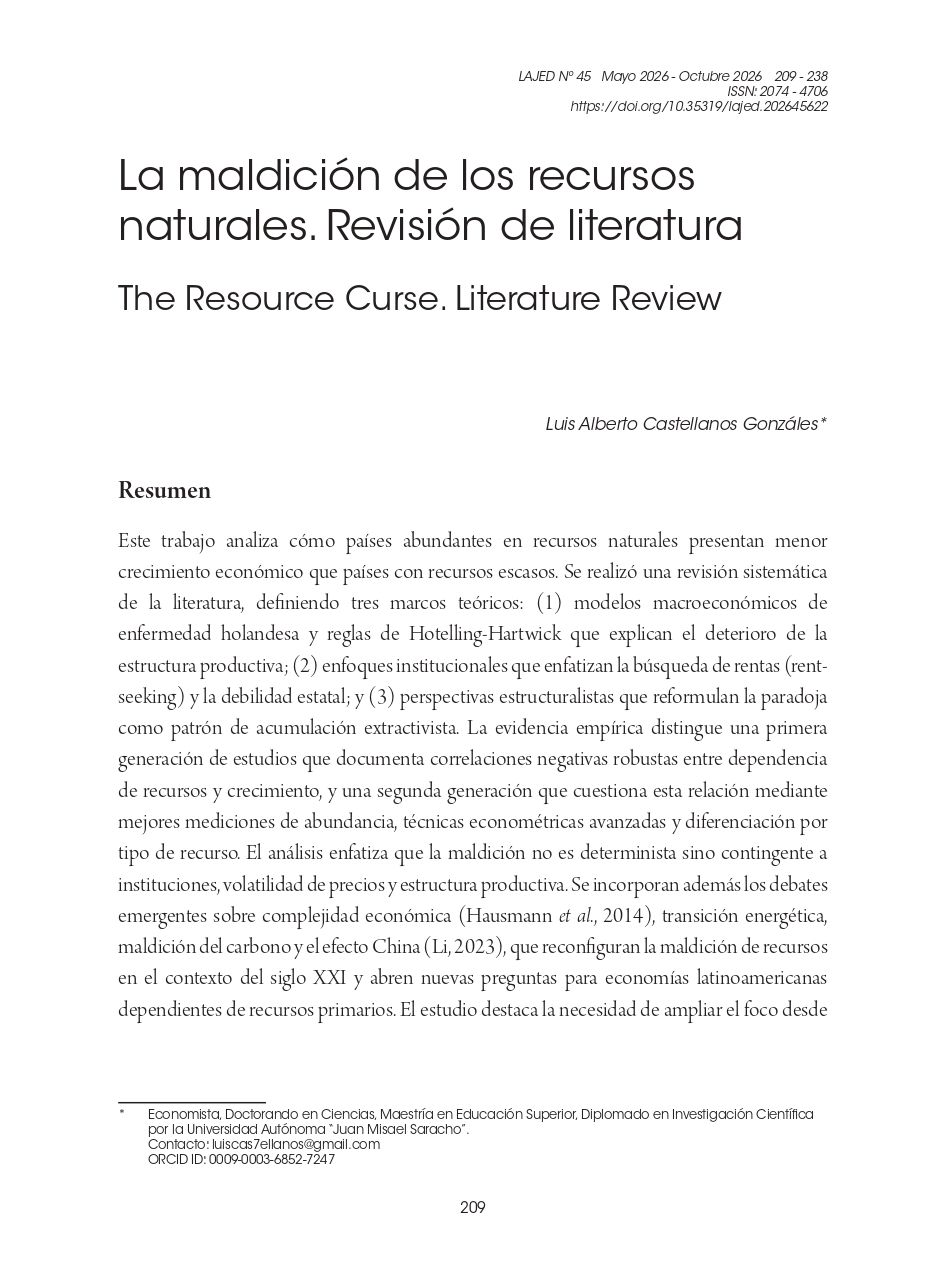
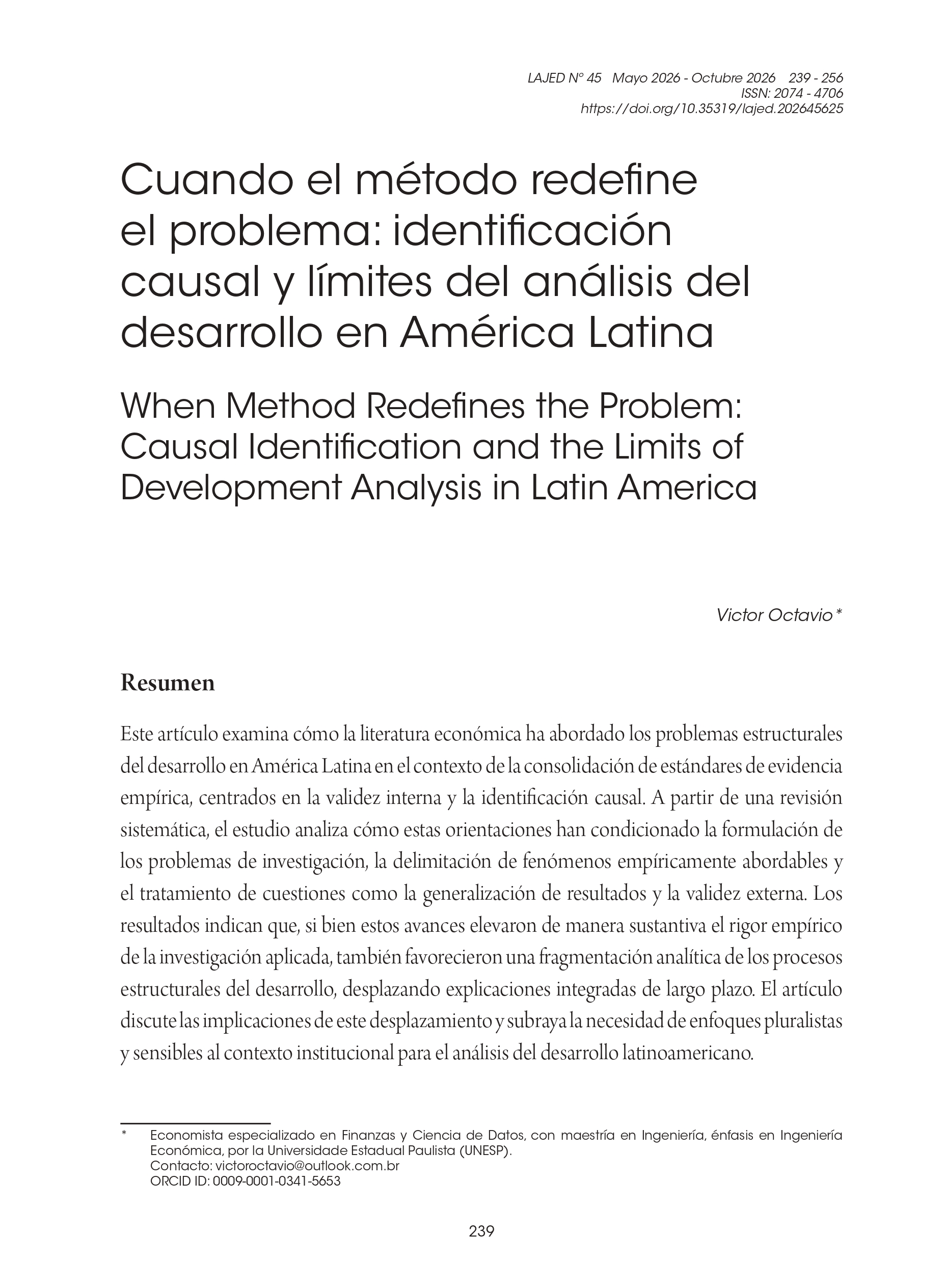
This issue brings together seven articles addressing a range of topics related to economic and social development in Bolivia and Latin America. The first article analyzes the geopolitical dispute over critical raw materials in Latin America, highlighting the competition between the European Union and China for access to strategic minerals such as lithium, copper, and lead. The second examines how the design of fiscal decentralization in Bolivia affects service provision, showing that local revenue-raising effort strengthens the effectiveness of transfers and improves outcomes in human capital and economic activity. The third article evaluates the progressivity of Bolivia’s main social programs between 2016 and 2024, showing their pro-poor character and their contribution to reducing inequality, particularly through Renta Dignidad. The fourth studies the relationship between water infrastructure, gender, and economic non-participation, emphasizing how restrictions in access to water may reinforce care burdens that affect women’s economic autonomy. The fifth analyzes the relationship between competition and technological dispersion across Bolivian industries, finding that greater competition is associated with smaller productivity gaps among firms. Among the discussion articles, the sixth reviews the literature on the natural resource curse, systematizing its macroeconomic, institutional, and structuralist approaches, as well as recent debates on the topic. Finally, the seventh critically reflects on the scope and limits of causal identification methods in the study of development in Latin America, underscoring the need for more comprehensive, contextual, and pluralistic approaches.